
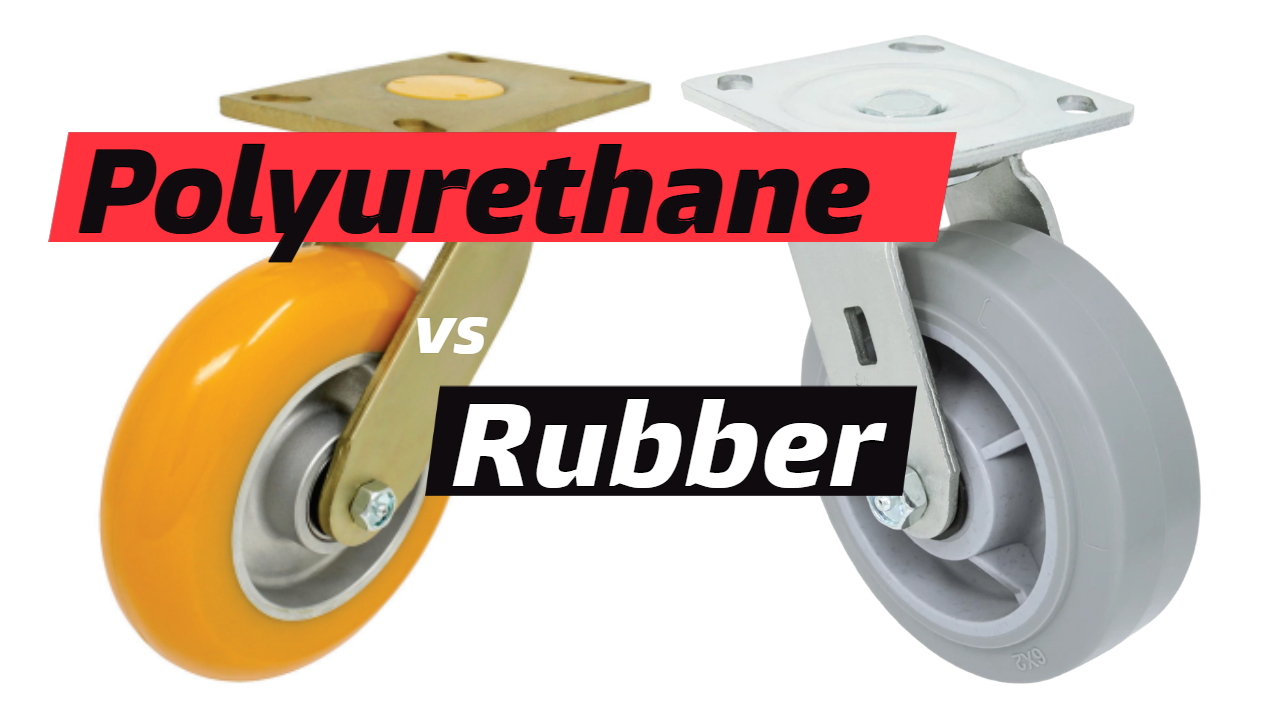
Casters, the unsung heroes of mobility, are pivotal in a myriad of applications, from industrial machinery to everyday office chairs. These wheeled appendages dictate not just ease of movement but also impact floor integrity, noise levels, and overall functionality. Within this domain, two materials often stand out for their distinct properties and applications: polyurethane and rubber. This analysis delves into the nuanced differences between polyurethane and rubber casters, offering insights into their composition, applications, longevity, maintenance needs, cost, and environmental impact. By dissecting these aspects, we aim to provide a comprehensive understanding that aids in making informed decisions for specific requirements, be it in an industrial, commercial, or domestic setting.
Basic Overview
Polyurethane Casters: Polyurethane, a versatile polymer, is renowned for its remarkable blend of elasticity and durability. Casters made from this material exhibit a unique balance between softness and strength, which translates to a higher load-bearing capacity compared to many other materials. This resilience makes them ideal for heavy-duty applications where they endure significant weight without deforming. Additionally, polyurethane is non-marking and offers excellent floor protection, resisting abrasion and not leaving scuff marks on surfaces like hardwood or tile. Its chemical composition also lends its resistance to many solvents, oils, and chemicals, enhancing its suitability for various industrial environments.
Rubber Casters: Rubber casters, derived from either natural or synthetic rubber, are known for their shock-absorbing qualities. They provide a smoother ride by dampening vibrations and reducing noise, making them ideal for applications in noise-sensitive environments like hospitals and libraries. Rubber’s natural elasticity offers good grip and traction, which is beneficial on slippery or wet surfaces. However, its softer nature means it may not withstand heavy loads as effectively as polyurethane, leading to quicker wear and potential floor damage under extreme weights. Rubber is also more susceptible to degradation from exposure to certain chemicals and extreme temperatures, limiting its use in some industrial settings.
Applications and Suitability
Applications of Polyurethane Casters: Polyurethane casters are a popular choice in various sectors due to their robustness and versatility. In industrial settings, they are often preferred for transporting heavy equipment, as their high load-bearing capacity and resistance to wear and tear make them ideal for demanding tasks. These casters are also prevalent in the healthcare industry, particularly in hospitals, where their smooth operation and floor-protecting properties are essential for moving medical equipment and patient beds. Additionally, their resistance to chemicals and solvents makes them suitable for laboratories and manufacturing plants where such exposures are common.
Applications of Rubber Casters: Rubber casters find their niche in environments where noise reduction and floor protection are paramount. They are commonly used in office settings on chairs and movable furniture, providing a quiet and smooth movement that is gentle on carpeted or hardwood floors. In outdoor applications, the traction provided by rubber is advantageous on uneven or slippery surfaces, making these casters a go-to choice for carts and trolleys in garden centers or outdoor events. Their shock-absorbing nature also makes them suitable for equipment that requires stability and vibration minimization, such as audio-visual carts in conference settings or libraries.
Comparative Analysis: While polyurethane casters excel in load capacity and durability, making them ideal for heavy-duty and industrial applications, rubber casters are the better choice for environments where noise sensitivity and floor protection are critical. The decision between the two often boils down to the specific environment and usage requirements. Polyurethane’s chemical resistance and strength suit more aggressive industrial environments, whereas rubber’s cushioning effect and quiet operation are perfect for indoor and noise-sensitive settings.
Longevity and Maintenance
Longevity and Maintenance of Polyurethane Casters: Polyurethane casters are known for their long lifespan, especially in environments where they are subjected to constant use and heavy loads. Their resistance to wear and abrasion contributes significantly to their durability. Maintenance is generally minimal, with occasional inspections and cleaning being sufficient to ensure optimal performance. In terms of temperature resilience, polyurethane casters perform well in a wide range of environments. They maintain their properties in both cold and warm conditions, though extreme temperatures may affect their elasticity and load-bearing capacity.
Longevity and Maintenance of Rubber Casters: Rubber casters, while offering excellent shock absorption, tend to have a shorter lifespan under heavy use or in environments where they are exposed to harsh chemicals or extreme temperatures. Regular maintenance, including checking for wear and tear, is more critical with rubber casters to prevent floor damage. In cold environments, rubber can become brittle and lose its elasticity, while in warm conditions, it may soften and degrade faster, especially if exposed to direct sunlight or high temperatures.
The choice between polyurethane and rubber casters in different temperature environments hinges on their respective responses to temperature extremes. Polyurethane offers more consistent performance across a broader temperature range, making it a reliable choice for varied conditions. In contrast, rubber casters might require more consideration regarding the specific temperature range they will be exposed to.
Cost Analysis
Cost Considerations of Polyurethane Casters: Polyurethane casters generally come with a higher initial price tag compared to rubber casters. This increased cost is attributable to their superior durability, load capacity, and chemical resistance. The long-term economic benefits, however, can offset the initial expense. Due to their longer lifespan and lower maintenance requirements, polyurethane casters can be more cost-effective over time, especially in industrial or high-use settings where replacing casters frequently would be costly and impractical.
Cost Considerations of Rubber Casters: Rubber casters are typically less expensive upfront, making them an attractive option for budget-conscious purchasers. While they are adequate for light to medium usage, the potential for faster wear and the need for more frequent replacements in heavy-duty applications can lead to higher long-term costs. The lower initial investment may be suitable for environments like offices or light commercial settings where the demands on the casters are not as intense.
Comparative Cost Analysis: The decision between polyurethane and rubber casters from a cost perspective largely depends on the specific application and frequency of use. Polyurethane casters, with their extended lifespan, may offer better value for money in high-demand or industrial environments. Conversely, for less demanding applications or where initial budget constraints are a consideration, rubber casters might be the more economical choice.
Conclusion
In conclusion, the choice between polyurethane and rubber casters hinges on specific requirements such as load capacity, environment, longevity, and budget. Polyurethane casters excel in industrial and varied temperature settings due to their durability and resilience, while rubber casters are preferable for noise-sensitive and light-duty applications with a focus on initial cost savings.